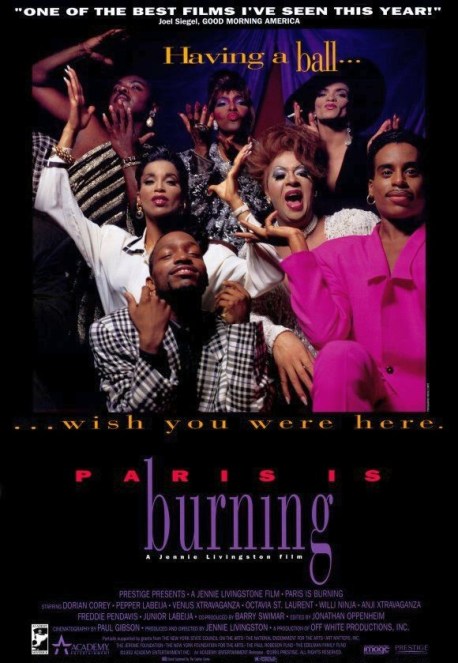
The 1990 documentary Paris is Burning is both enlightening and refreshing as it gives a glimpse into a subculture that many are unfamiliar with, myself included. Depicting life within the drag circuit in New York City during the mid-to-late 1980s, the film follows performers (called drag queens) as they compete while trying to achieve wealth and fame along the way. This film is instrumental in the sense that it allows members of this marginalized community to share their stories and experiences in their own words. Due to this, Paris is Burning can be exceptionally educational and representative, if it’s accompanied by adequate background as well as follow-up information, otherwise pertinent material can be lost, forgotten, or misconstrued.
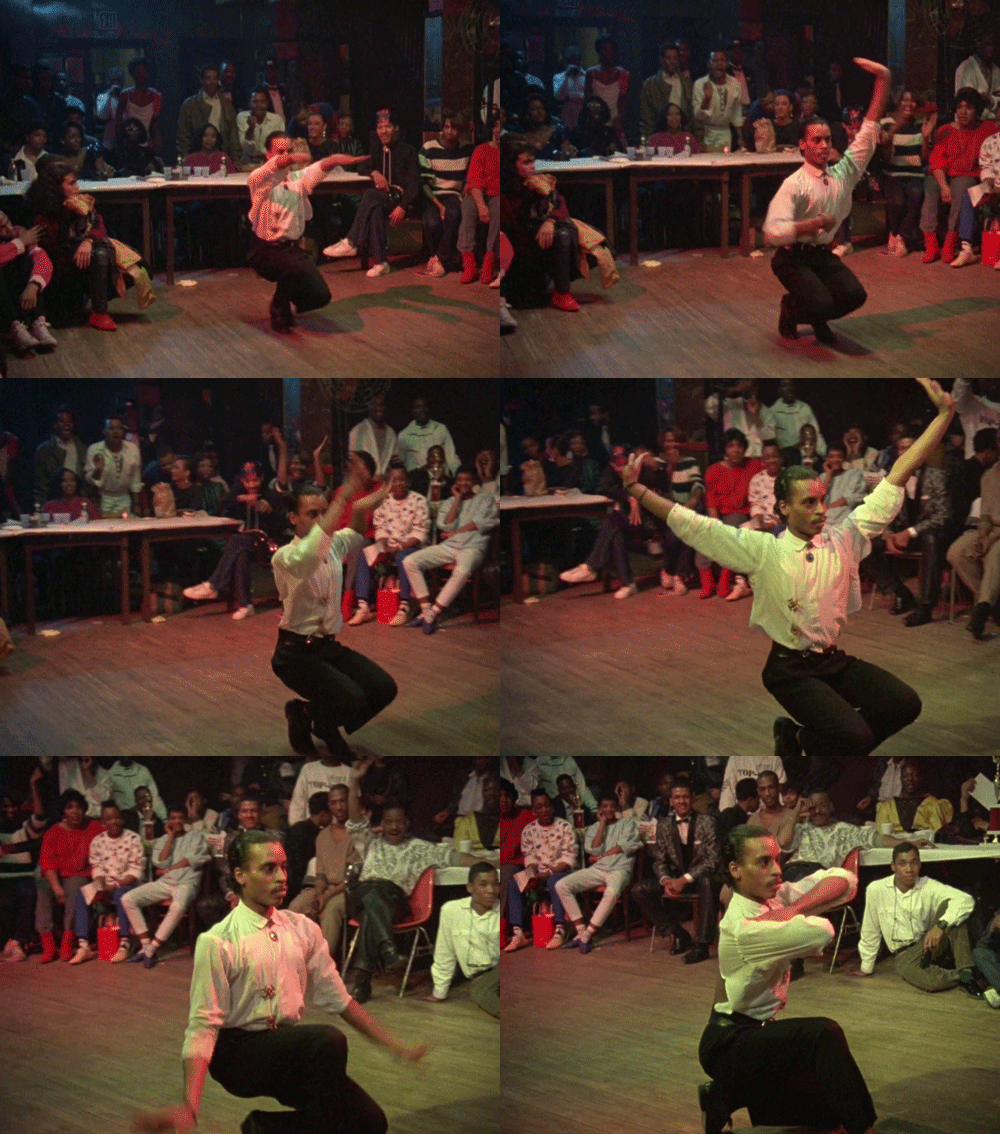
This film invites audiences into the previously unexplored world of the drag queens and the surrounding ball circuit. Balls are competitions where performers are judged on their ability to present an authentic version of whichever category they are emulating, from their attire down to their voguing (a dance form consisting of poses that imitate high fashion catwalks). The documentary focuses on a few key members of the ball circuit including Willi Ninja, Pepper LaBeija, Dorian Corey, and Venus Xtravaganza, providing candid, one-on-one interviews with each individual.
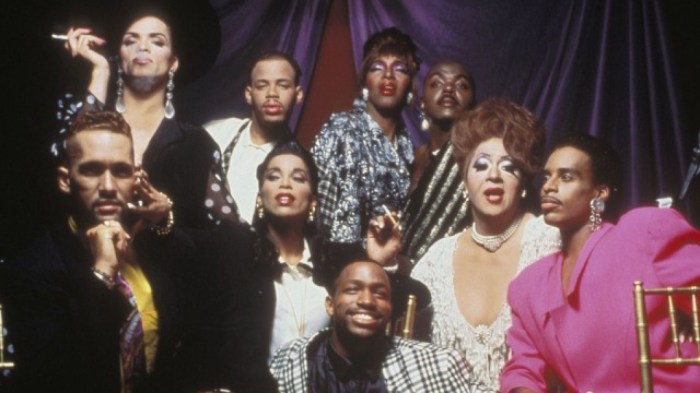
What separates this film from other queer films is the fact that it’s focused around queer people of color, as opposed to the typical cisgender, white, gay/lesbian men and women that tend to be featured on the silver screen. The intersectionality of this documentary is further emphasized with the ball categories. In her chapter, “Gender is Burning: Questions of Appropriation and Subversion,” Judith Butler notes how the “categories include a variety of social norms,” (386) yet this does not mean all of the competitions are geared toward white culture. Butler goes on to say how, “some of them are replications of a straightness that is not white; and some of them are focused on class” (386). A few of the ball categories are “school boy/girl,” “butch/femme queen,” “executive,” “military,” and “high fashion.” The implementation of these inclusionary categories brings more participation and creates a space where the spectrum of race, class, and gender can be encapsulated while coexisting.
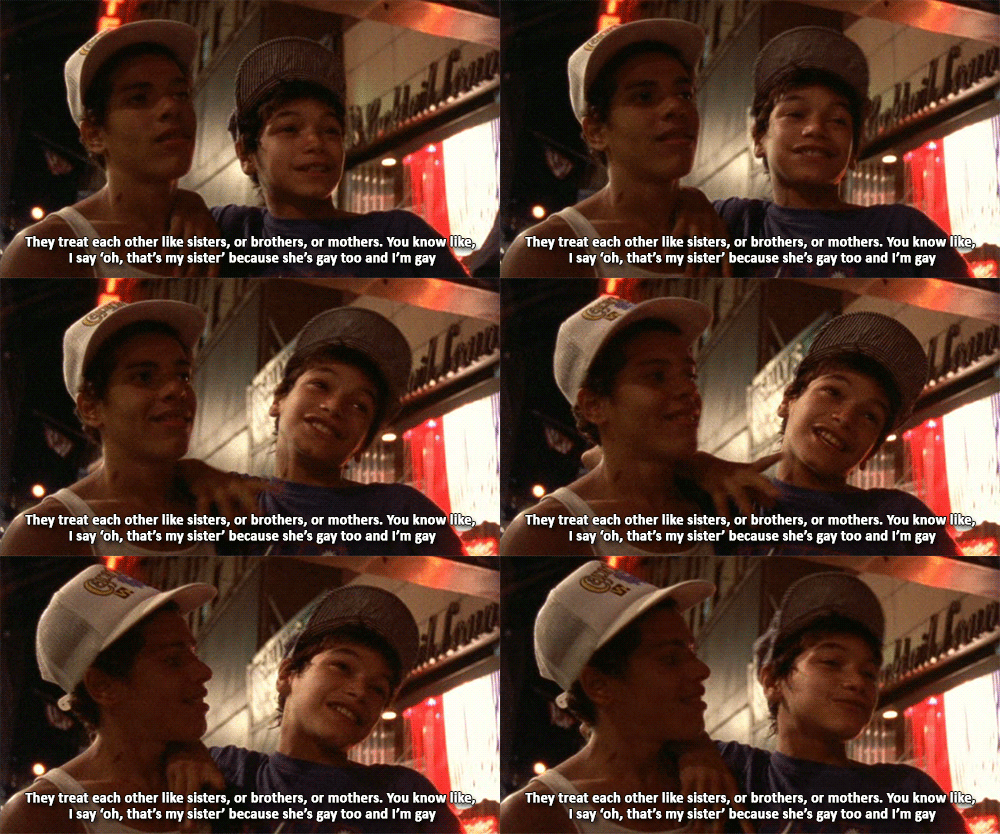
The last names associated with the performers indicate which “house” they belong to. “Houses” are social groups and teams within the ball circuit that are named after performers who have become well known via competitions. Within each house there is a “mother” and/or “father” who provide support and guidance to house members. While those in the same house do not necessarily live together, they do offer a sense of community, especially to LGBT+ teenagers. Some as young as 13-years-old have run away due to lack of acceptance from their families. In this sense, these houses have actually become homes to many members of the drag scene, supplying compassion and care they had previously been denied.
Even with the multitude of positive aspects, this film still contains quite a few problematic, even insensitive elements. While it may appear as though the performers are getting the opportunity to tell their own stories (which in some ways they do), the director is still in the driver’s seat for how scenarios, even unscripted ones, are translated onto screen. In this case, that person is Jennie Livingston, a white, cisgender lesbian woman. None of these characteristics are ever explicitly disclosed to viewers as Livingston never makes an appearance on screen. In her chapter, “Is Paris Burning?” bell hooks writes how, due to this unstated information, audiences “are watching a work shaped and formed by a perspective and standpoint specific to Livingston” (151). Whether they want to admit it or not, a majority of people passively watch films, never digging deeper than the content placed directly in front of them. While it would be easy to believe this film is a well-rounded portrayal of drag queens at the time, the fact remains that many details are modified if not ignored altogether. Despite being a member of the LGBT+ community, Livingston is still an outsider in this circumstance and it must be taken into account.
hooks writes about how the film never strays too far from the ball circuit, making it “the center of their lives” (154). While the balls and houses act as positive support systems, and may even be the entire world for some performers, the documentary does not leave room for the possibility that this may not be the case for all members of the community. Other than interviews from housemates, there is no commentary from friends or family outside of the drag circuit, which “makes it appear that the characters are estranged from any community beyond themselves” (154). Unfortunately, this takes away from the complex nature of human beings, acting as if these peoples’ lives cease to exist outside of the balls.
In addition to this, Livingston tends to gloss over other issues regarding the LGBT+ community that require more attention, opting instead to mask them with glamorization aspects in the film. For instance, during the AIDS crisis, LGBT+ people of color were just as, if not more affected than their white counterparts by the epidemic. Despite this, the only mention of the virus comes when someone can be heard saying they are merely afraid of contracting it. By not delving deeper into this topic once it’s mentioned, the film makes it seem as though it is an irrelevant, insignificant topic that does not claim the lives of many all while adding to the oppression they already face.
Perhaps the biggest injustice committed by Livingston within this documentary is the almost complete disregard for the brutal murder of Venus Xtravaganza in 1988. This information is shared by Angie Xtravaganza, Venus’ house mother, in a short interview excerpt. She was killed by someone who has still never been found nor identified, but it’s assumed that it was someone who became enraged upon discovering that she was a transgender woman. In fact, her body was not found until four days after the incident, making her death all the more tragic. Aside from Angie’s commentary, no other footage concerning Venus’ murder is included. Since the film was released almost two years after Venus’ death, it’s likely there is other content in regards to the matter (i.e. initial reactions, possible memorial footage), yet none of it is shown. In addition to this, even Angie’s remarks seem oddly calm and composed, indicating that some time has presumably passed, especially if they were as close as Angie let on.
Even more appalling and heinous is the victim blaming that occurs both leading up to and following Venus’ murder. Angie states how she always warned Venus about her reckless and trusting behavior prior to her death, carrying with it a sort of ‘she had it coming’ vibe. Angie then states, “but that’s part of life, that’s part of being a transsexual in New York City.” Rather than calling for action and expressing outrage at her friend’s murder, it seems as though she has come to terms with the fact that this is a normal occurrence. This notion alone warrants more attention to the subject matter on the film’s part along with a further exploration so that these tragedies may be prevented. In my opinion, the film needed to push this issue deeper so as to uncover why this is the attitude adopted by many, while also working to diminish the complacency outside the community.
Almost immediately following this shocking news, the solemn tone is quickly washed away as a montage of ball clips accompanied by an upbeat song take over the screen just minutes later. Venus’ name does not even make the cut for the “In Loving Memory” section of the film that precedes the credits. The fact that the whole ordeal is overshadowed by clips of ball competitions puts forth a pretty harsh message: drag is completely acceptable, so long as it stays within the confines of the balls. These performers’ aspirations and goals will be tolerated if and only if they stay in the form which they began, as fantasies. Venus’ demise proves that if anyone within the ball circuit even attempts to enter into the part of the society they have been blatantly ostracized from, they will be met with deadly consequences.
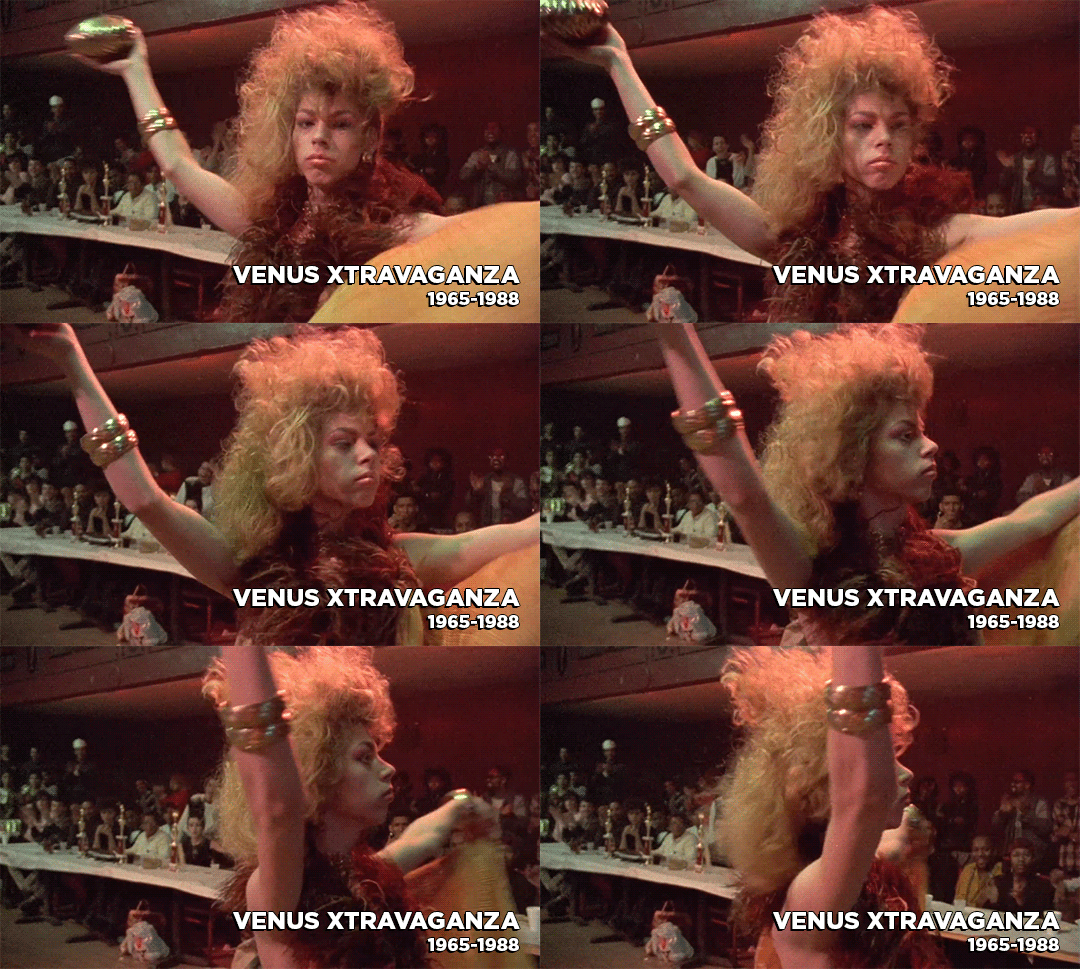
With this being said, I thoroughly did enjoy this film, as I believe this subculture needs and deserves a celebratory piece. All too often, queer films either kill off or only focus on the negative aspects faced by the LGBT+ community, if they are even featured in the first place. The houses provided me with a newfound hope that just because LGBT+ teens are rejected by their homophobic families, does not mean they won’t eventually find a group of similar individuals that will support and accept them. I also think it’s important that the film paid homage to concepts still used today, as many are unaware of their origins (i.e. voguing, “shade,” etc.).
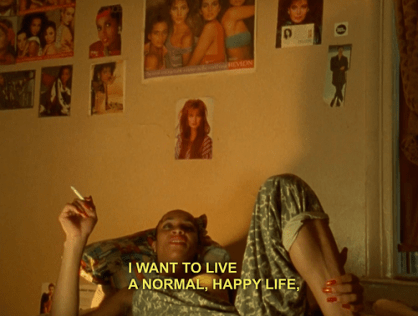
However, we cannot afford to ignore certain issues, especially when they are an ominous presence, lingering in the background of this film. Although these pressing problems are referenced, the film offers little to no follow-up for the questions it has created. At the conclusion of this film I found myself wondering what became of all the performers interviewed and documented. Did any of them ever achieve their goals, thus making their dreams a reality? Or did they suffer an untimely and undeserved death like that of their friend? I think it’s worth noting that we can appreciate an art form while still being critical of it. In this case, we can admire the visibility of an overlooked group, but we must also keep in mind the lens through which the film is being shot. We can acknowledge the positive impact and discussions that develop as a result of this film, so long as we recognize that the glitz and glamour can sometimes be a distraction from injustices that are occurring behind the scenes.
Works Cited
Butler, Judith. “Gender is Burning: Questions of Appropriation and Subversion.” Bodies That Matter, Roudedge, 1993, 386.
hooks, bell. “Is Paris Burning?.” Black Looks: Race and Representation, South End Press, 1992, 151-154.
Paris is Burning. Dir. Jennie Livingston, Miramax, 1990.
“Venus Xtravaganza’s Murder.” YouTube, uploaded by Darnell Ny, 22 May 2013, https://www.youtube.com/watch?reload=9&v=4ekU2KVP2HE.

 Queer Cinema
Great review!
LikeLike
You make a lot of great points in your analysis. These stories deserve to be told, but there’s still a lot left to be desired in their telling. The movie is still enjoyable, but that doesn’t mean we can’t acknowledge the problems. I liked the point you made about how the movie sends the message that drag or transness is only acceptable in the realm of fantasy. I’d never thought about it that way before, but showing Venus’ murder does inadvertently give the impression that you shouldn’t be yourself in public.
LikeLike
The way that you summarize the premise of the documentary within the first few paragraphs is phenomenal. You really captured what the documentary is about in a very respectful and informative way. You also bring up a very valid point in that Livingston’s race or sexuality are never mentioned in the film. Without knowing that she is a white, cis-gendered woman, I wonder how I would have viewed this film. I also like how you bring up the point that, if you watch this documentary without much background information, a view might believe that these balls are all the members of the documentary care about. I am sure that they have much more in their lives that they care about, but as you stated, the footage is limited to what Livingston has decided to show.
LikeLike
“Whether they want to admit it or not, a majority of people passively watch films, never digging deeper than the content placed directly in front of them. While it would be easy to believe this film is a well-rounded portrayal of drag queens at the time, the fact remains that many details are modified if not ignored altogether.”.. YES YES YES YESSS! This was a great perspective. The points you make throughout your piece were so amazing. I especially liked the piece I copied and quoted. Great analysis.
LikeLike
Your analysis of the film was great. You did a good job of showing why this documentary is good and what it did do right by focusing on some of the things the film did right. But you also call the director out on the things she could have done better to make the documentary tell a more realistic story of the drag community. Your analysis is the context people would need to read before watching Paris is Burning.
LikeLike
I think your discussion about the victim blaming and the glossing over of Venus’s death is very telling of what Livingston created, whether it was fully intentional or not. However, I do believe there was some intention. I think the film did a poor job of creating a robust understanding of the community. All of those who were interviewed held very similar viewpoints (some slightly more cynical than others); nevertheless, Livingston makes the audience believe “This is the way it is”, rather than these queens more likely believing “We want this to change”. You did a fantastic job capturing exactly what many people need to consider after debriefing from this documentary.
LikeLike