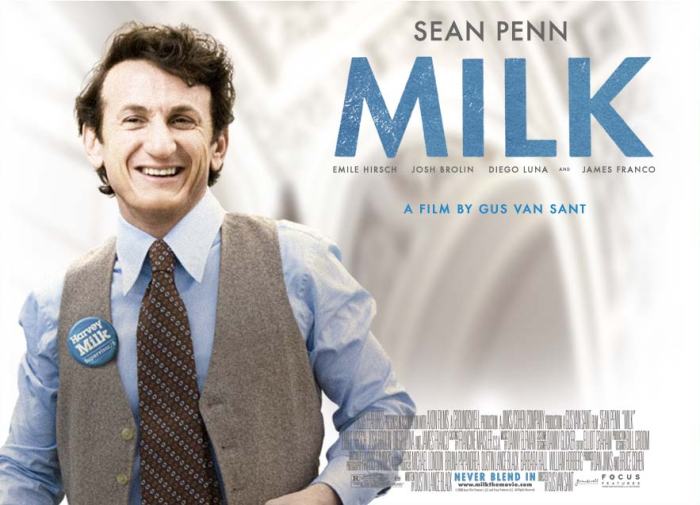
Whether they have seen the films about his life or not, a majority of people have at the very least heard the name Harvey Milk. Personally, I was aware of his existence, but was entirely unaware of the massive impact he made through his work. Therefore, after viewing the 2008 film Milk for the first time, I experienced a multitude of conflicting emotions. As the credits began to roll, an overwhelming sense of tiredness came over me as, upon learning of the historical events portrayed within the film and being reminded of the eerily similar events happening today, I was utterly sickened by the state of the nation, both then and now. It feels that monumental progression is continually made by hundreds, even thousands of people, only to have it be completely negated by the actions of a few. At the same time, however, the film and its ending enraged me and despite the tears forming in my eyes, I wanted to take and demand action against all of the injustices taking place within the country. I believe this demonstrates the ways that Milk has the ability to adapt to the context in which it is viewed.
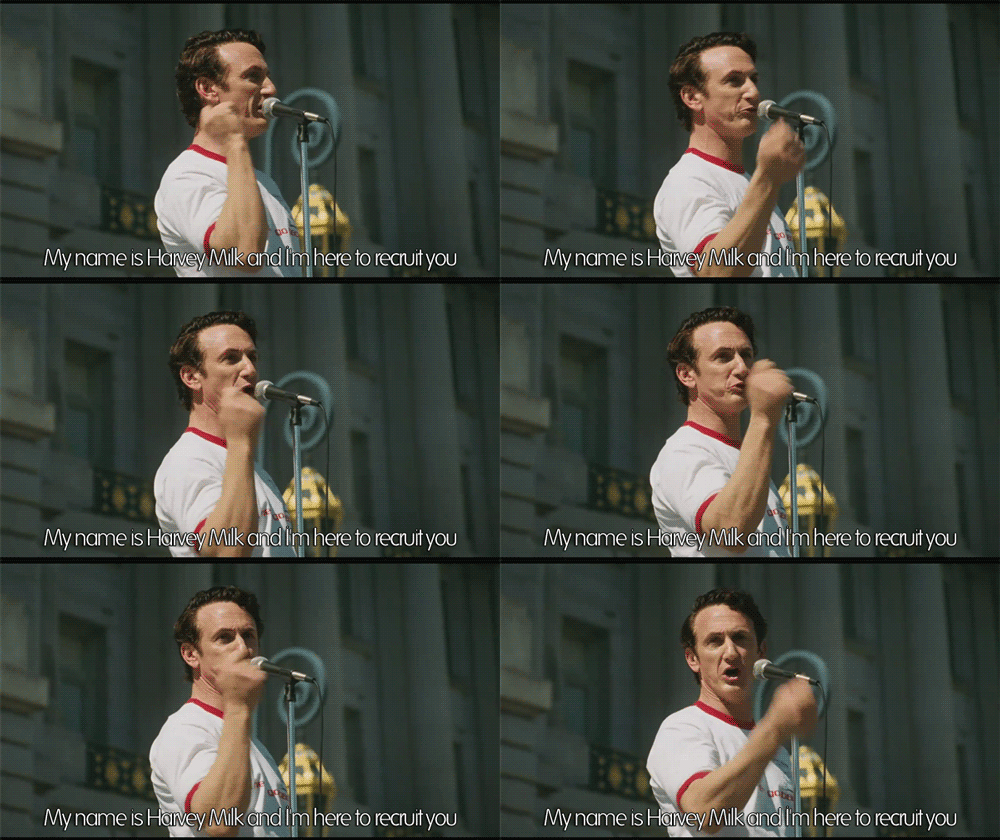
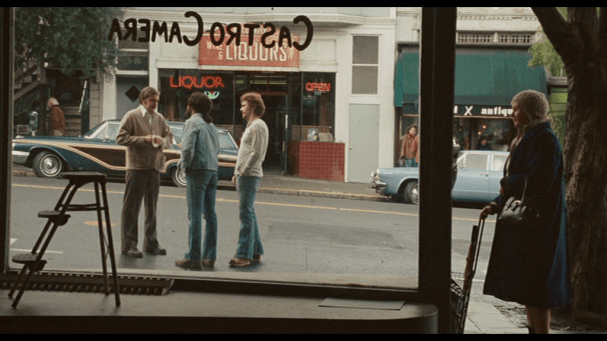
Directed by Gus Van Sant, the biopic details the life of Harvey Milk (Sean Penn), who was the first openly-gay city supervisor elected in San Francisco in 1977. The movie opens, quickly introducing Milk’s relationship with Scott Smith (James Franco) as they decide to move to San Francisco in hopes of living a more relaxed life as an openly-gay couple. They open a camera shop on Castro Street, rightfully named “Castro Camera,” which steadily becomes a sort of sanctuary for gay men living in the neighborhood. Due to it being a predominantly gay district, police and other residents often invade and terrorize Milk and his patrons. This in turn causes Milk to decide to run for local office, serving as a gay rights activist and attempting to speak for the voiceless along the way.
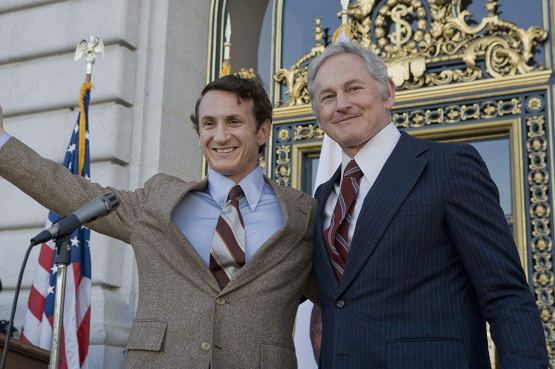
In 1973 and 1975 Milk runs for city supervisor and loses both elections. In 1976 he decides to run for California State Assembly, but again is denied. Finally in 1977, Milk wins a seat on the San Francisco Board of Supervisors. His focus then shifts from campaigning for votes to pushing for political change in regards to gay rights, with Proposition 6 (which sought to ban gays and lesbians from working in public schools in California) at the center of his attention. After a hard fought battle, Prop. 6 is denied in the state of California and celebration ensues. But on November 27, 1978, only 20 short days after this monumental decision occurs, Dan White (Josh Brolin), Milk’s former, conservative colleague, enters City Hall where he then shoots and kills both Mayor George Moscone (Victor Garber) and Milk, who had only been in office for a mere 10 months.
Milk attempts to take audiences back in time and thanks to the great lengths Van Sant and his production team went to, the film succeeds in completing this transportation. Much of the movie was filmed on Castro Street, and Milk’s former storefront was utilized. In order to accurately capture the time and place they were portraying, regulations were put in place so as to not break the illusion. Volunteers and extras used during crowd scenes were even given a list of items that were off limits, including:
No overt rainbow themed outfits, as the rainbow flag was not yet the official symbol of the gay community in 1978.
No “circuit party” clothing or “Rave clothing” that would read as trendy or modern.
No trendy designer jeans with over modern finishes. . .
No clothing with branding such as Abercrombie, Nike, Gap, etc.
No overt phrases or logos (Rich 245).
Actual footage from the time period, coupled with Penn’s noteworthy performance causes audiences to feel as though they are either in that specific time or as if it is not the past, momentarily forgetting that neither of these notions are true. In her chapter, “Prosthetic Memory: The Ethics and Politics of Memory in an Age of Mass Culture,” Alison Landsberg discusses the concept which she refers to as “prosthetic memory,” stating that mass media makes it possible for people to possess memories of experiences that are not their own. She notes how this can “affect people in profound ways–both intellectually and emotionally–in ways that might ultimately change the way they think, and how they act, in the world” (158). This is essentially the case with Milk, as those who watch it cannot help but be affected by it, and with the authentic aspects of its production at times it feels as though you lived through it. The film reaches through time and impacts or at least influences whichever political climate it is viewed in.
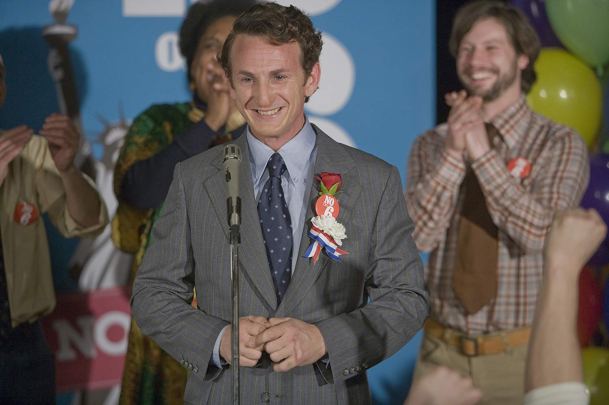
The film was released in 2008, almost 30 years after the time in which it is set. However, its messages still translate to viewers as if no time has passed whatsoever. In the movie, shortly after a victory occurred for gay rights with Prop. 6 being denied, one of its leaders, Milk, is murdered. Fast forward roughly three decades and the situation feels almost inverted. In 2008, only three weeks after the film’s premiere, the federal election took place, “which provided liberal voters with both extraordinary pleasure (on account of the election of Barrack Obama) and unanticipated pain (because of the passage in California of Proposition 8, which defined marriage as a union between a man and a woman)” (Erhart 166).
In the first instance progress was made while a leader fell, whereas in the latter circumstance regression took place while a new leader rose. Both of these situations feel bizarrely similar, especially since both elected officials (Milk and Obama) led their campaigns with messages of hope. Even today, in 2018 (almost ten years after the film was released and nearly 40 since the actual events took place), the movie reminds viewers of the quickly approaching midterm elections, along with how little has changed in regards to LGBT+ rights. With all of this in mind, the film proves just how crucial it is to take to the polls, as voter turnout can be a deciding factor on laws and bills that affect people’s day to day lives.
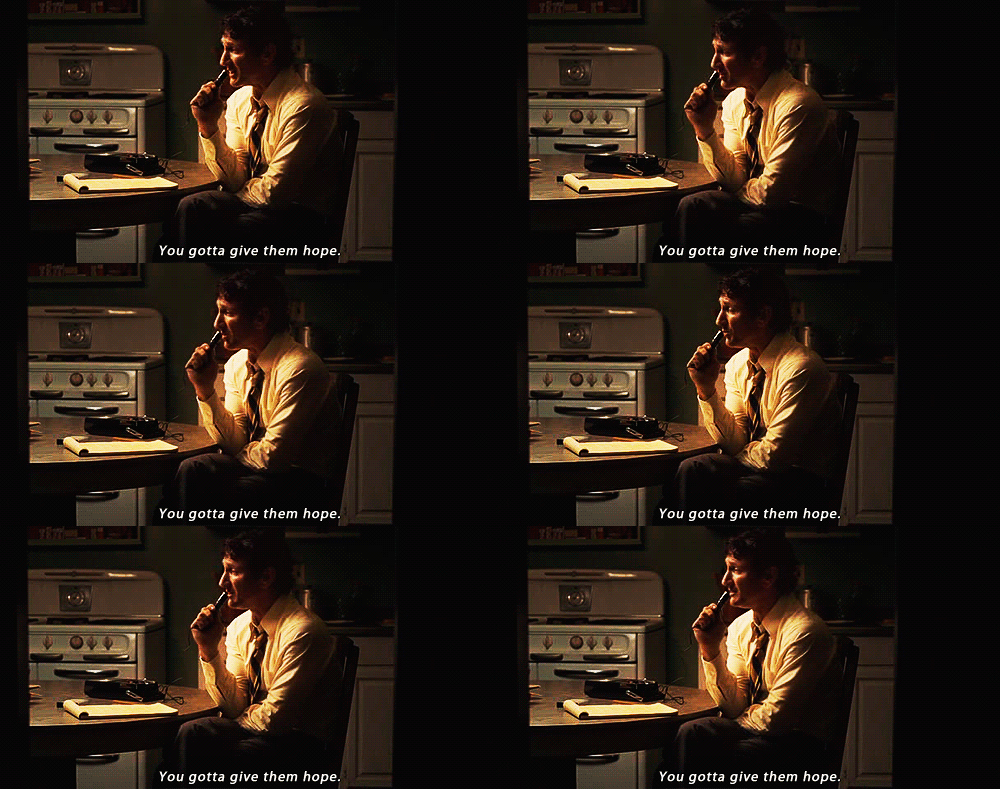
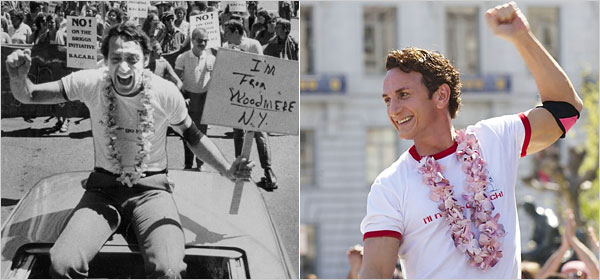
While Milk both influences and affects viewers, in doing so it still begs the question of which is worse: misrepresentation or absence? Both concepts leave much to be desired, and it is a difficult task determining if it would be better to have a straight man portray Milk or to not have a blockbuster film be made at all? B. Ruby Rich shares her discontent upon first viewing the film as she wonders, “Would I have been more mesmerized by an unknown in the role? Maybe, but would any company have bankrolled it” (248). Perhaps in this circumstance, an accurate portrayal is better than a low-budget film or one that features a less capable or revered gay actor. While Penn is straight, he more than fully commits to the role, from his mannerisms down to his slight resemblance to the actual Milk. He delivered an exceptional performance, to which he received much acclaim and praise. In total, the film received 8 Academy Award nominations, to which it won two–Best Original Screenplay and Best Actor in a Leading Role, the latter courtesy of Penn. Rich even admitted, as I’m sure many others would, “[w]hile it’s a sad truism that straight actors all too easily win an Oscar for playing gay, in this case Penn deserved it” (255).
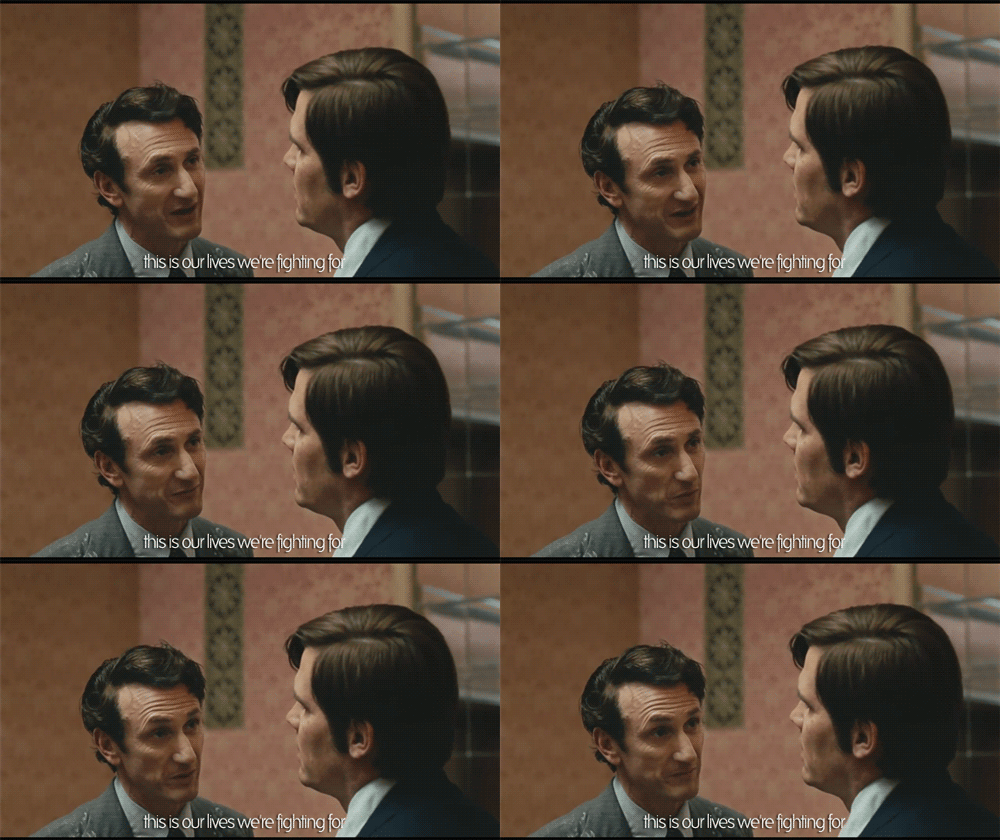
I think more than anything, the film puts into perspective the fragility of circumstances. All too often people work tirelessly and eventually see substantial progress being made over the course of several years, only to have their hard work unravel overnight. This can be extremely discouraging and regularly makes people want to give up, feeling as though their efforts are done in vain. Then people like Harvey Milk emerge. He would receive death threats on a daily basis and largely due to this, he knew that tomorrow was not promised, yet he fought for change anyway.
As mentioned previously, Milk (both the person and the film) carries with it a message of hope, reminding viewers “It’s not just about winning” (Milk), but rather about gaining visibility for one’s cause. The film reaches through time and serves as an act of remembrance for Harvey Milk (who even today, is mourned like that of an old friend) as much as an igniter of change, teaching that change happens steadily, not immediately. Sometimes the best way to progress a movement is with the exact mentality Milk used–start with your street and slowly expand.
Works Cited
Erhart, Julia. “The Naked Community Organizer: Politics and Reflexivity in Gus Van Sant’s Milk.” a/b: Auto/Biography Studies, vol. 26, no. 1, 2011, 156-170.
Landsberg, Alison. “Prosthetic Memory: The Ethics and Politics of Memory in an Age of Mass Culture.” Memory and Popular Film, edited by Paul Grainge, Manchester University Press, 2003, 144-161.
Milk. Directed by Gus Van Sant. Performances by Sean Penn, Emile Hirsch, Josh Brolin, Diego Luna, and James Franco. Focus Features, 2008.
Rich, B. Ruby. “Got Milk?: Gus Van Sant’s Encounter with History.” New Queer Cinema: The Director’s Cut, Duke University Press, 2013, 236-257.

 Queer Cinema
Thank you for your review! I was amazed that Van Sant and his crew were able to actually film in the Castro and even got to use the actual Castro Camera storefront. Van Sant wanted the film to feel like a documentary, and it definitely shows. It’s kind of eerie how this film continues to be relevant to recent events. It lined up perfectly with Obama’s election when it first came out, and like you said, ten years after its release, it resonates with the current political climate and the coming midterms. It just goes to show that history is always more relevant than people realize.
LikeLiked by 1 person
You did such an amazing job captivating your focal points in the film. It definitely made me reconsider and analyze my perspectives. I too was conflicted with tons of emotions as the credits ran down the screen. So many questions filooded my brain.
LikeLiked by 1 person
I really enjoyed your parallels you drew through different time periods. This film holds a lot of purpose in both its timing and presentation. I think there is a lot of power in telling a story like this in order to somewhat jog the memory of the public. Our country has had a lot to lose in the past few decades as far as human rights are concerned. I think the inspiration this movie draws upon is meant to conjure up feelings of resilience. Harvey Milk’s life and the way they portray him is a perfect hero story cut short. There is great power in films like these, and I really enjoyed how you identified how history can repeat itself. Thanks for sharing!
LikeLiked by 1 person