All too often, queer identities tend to be written off as a virtually new concept. Simply because accurate terminology did not exist in earlier times does not mean that these identities were absent. In her chapter, “Transsexual Empires and Transgender Warriors,” Nikki Sullivan notes that “[a]lthough the terms transsexual and transgender have been coined only relatively recently, a variety of forms of gender ambiguity can be found throughout history and in a huge range of cultural contexts” (99). Contrary to conservative beliefs, it is a known fact that queer identities have always existed, however, sometimes it’s refreshing to be given a tangible example of this.
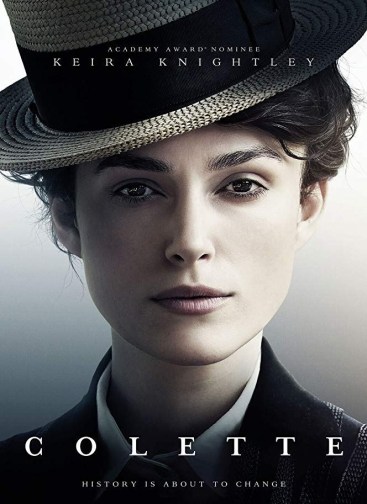
Both the 2018 film Colette and the 1999 film Boys Don’t Cry provide audiences with dramatizations of gender non-conforming people that existed centuries ago as well as just decades in the past. These biographical films serve as reminders that queer people have and will always be present, both then and now. On the surface the two movies appear to be complete different, but they actually exhibit many of the same themes while also highlighting historical figures that challenged and redefined the idea of masculinity as we have typically come to view it.
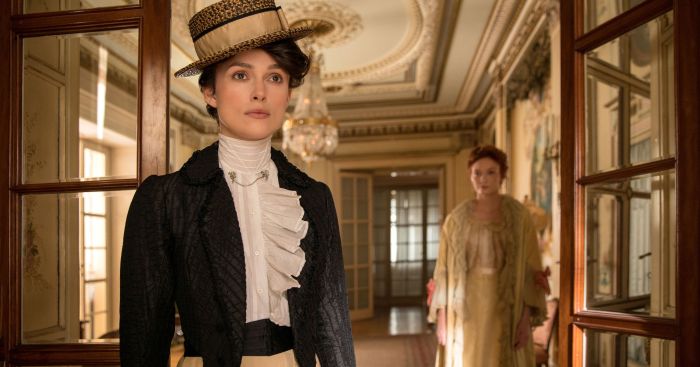
Premiering at the Sundance Film Festival earlier this year, Colette gives a glimpse into the life of the world-renowned French novelist, Sidonie-Gabrielle Colette (Keira Knightley). The film begins in France in the 1890s, where it introduces viewers to Gabrielle Colette who, at the time, is a young and high-spirited woman that marries the much wealthier Henry Gauthier-Villars (Dominic West), who is a well-known critic and publisher.
Desperate to write a successful novel in hopes of generating some sort of revenue, he employs the talents of his wife. Basing the book on her personal experiences, Colette writes the Claudine series, which are then published under Henry’s pen-name “Willy.” The novels are a huge hit and Claudine becomes a household name. For quite some time, no one is aware that Willy is not the true author, as he receives the credit that Colette deserves. The film then details Colette’s various struggles within both her relationships and her art. Eventually she is able to break free from her husband’s control and, in doing so she subverts traditional gender roles and undergoes a sort of self reinvention.

Boys Don’t Cry, on the other hand, hits a little closer to home–quite literally as it takes place in Falls City, Nebraska in 1993. The film details the story of Brandon Teena (Hilary Swank) and the heinous events he endured. Born as Teena Brandon, he decides to move to Falls City after facing discrimination in his hometown. Upon this move, Brandon befriends Candace (Alicia Goranson), John (Peter Sarsgaard), Tom (Brendan Sexton III), and Lana (Chloë Sevigny)–whom he immediately falls for. When John and Tom find out that Brandon was born as Teena they brutally beat and rape him. Despite Brandon reporting the assault to the police, they decide to not press charges as they are more concerned with Brandon’s “sexual identity crisis” rather than the crime committed by his attackers. The police briefly question John and Tom, which does nothing except alert them to the fact that Brandon reported the incident. Several days later, they find out where Brandon has been hiding out and murder him.
At first glance, these films have nothing in common. They are set in different countries and occur in entirely different centuries for that matter. Yet, despite this distance, both movies illustrate people who refuse to conform to specific gender expectations while also displaying how gender and sexuality exist on a spectrum.
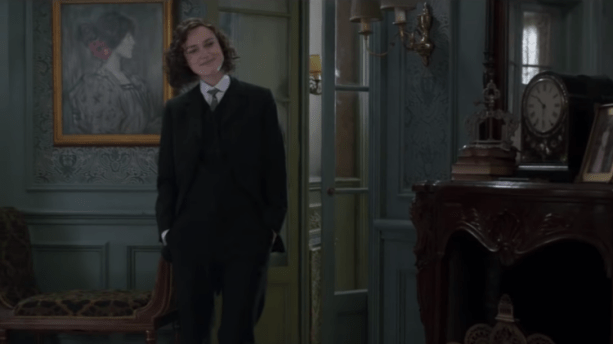
Judith Halberstam introduces a concept that she refers to as “female masculinity,” which challenges the widely held belief that masculinity is exclusively reserved for men. She states that “masculinity must not and cannot and should not reduce down to the male body and its effects,” (1). This point is particularly displayed with Colette, and is encapsulated in the scene where she strolls into Willy’s office wearing a full-fledged suit for the first time. She is confident, not cocky as she has assumed an attire that does not make her feel physically and socially restricted the way her old outfits did.
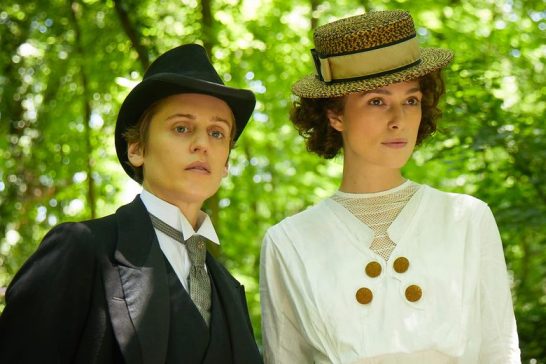
Along with dressing differently than the women in her social circle, Colette adopts characteristics that many would only associate with men. She makes snide comments to Willy regarding the Claudine books, in a way that hints at the fact that she is the true author. Colette is not only witty and blunt, but she is also fearless as she unapologetically owns and expresses her sexuality within her relationships. In her relationships with Georgie (Eleanor Tomlinson) and Missy (Denise Gough), Colette does not force herself onto her partners the way her husband and so many other men often do. Instead, she remains kind and respectful in her encounters.
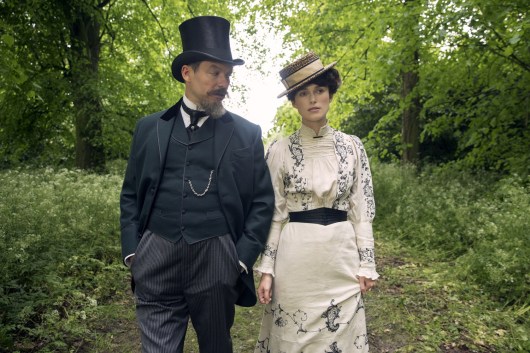
When Colette meets Georgie, an American debutante, she quickly begins a relationship with her. Willy enthusiastically encourages this romance, and even begins having sex with Georgie behind Colette’s back. Willy dismisses Colette’s anger upon her discovery of the affair, telling her that it’s “what men do”. Shortly thereafter he contradicts himself when he tells Colette that he would be infuriated if she were with another man. Despite the fact that this is the behavior many men often exhibited, Colette refuses to just accept it, as she continues on with her relationships on her own terms, regardless if Willy approves of them or not.
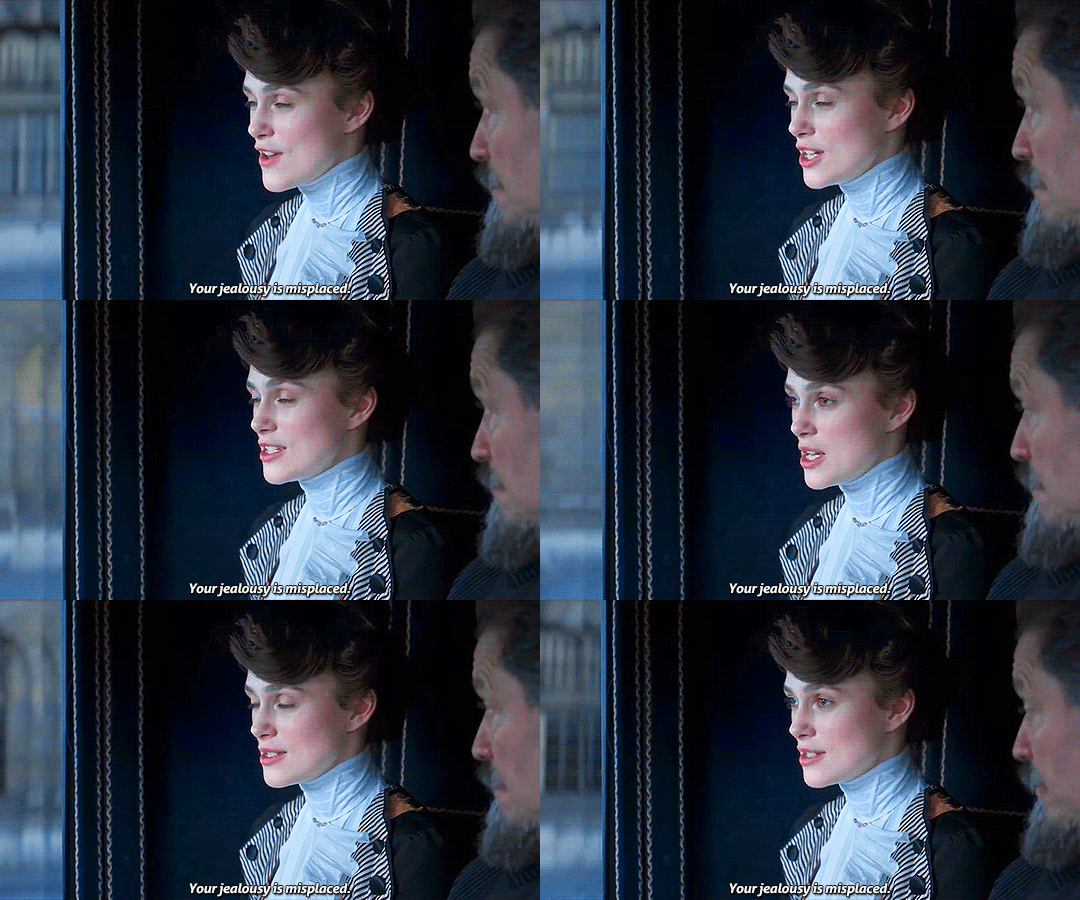
Other characters that exhibit queer masculinity are Missy from Colette and Brandon in Boys Don’t Cry. Neither of these characters’ gender identity is explicitly stated, but the films suggest they are trans men, using he/him pronouns in both cases. Although their gender identities are more closely related to the male characters in their respective movies, Missy and Brandon present masculinity in a way that contradicts their cisgendered, male counterparts. Missy and Brandon are compassionate, gentle, and courteous as they provide emotional support for Colette and Lana. The women in Missy and Brandon’s lives thus fall for them because their behavior “contradicts and challenges traditional assumptions about what it takes to be a man and to please a woman” (Cooper 53). Missy and Brandon understand Colette and Lana in a way that Willy and John choose not to for fear of being labelled as “weak” or “feminine.”
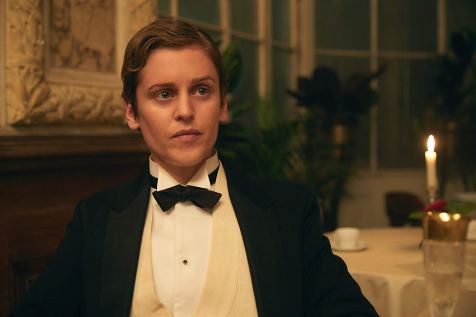
Unlike the other men in the films, neither Missy or Brandon were born male, yet their masculinity comes off as more natural and authentic compared to Willy, John, and Tom. Contrary to Missy and Brandon, the cisgendered men in each film appear to be more performative in their attempt to present themselves as men, perhaps because they feel that if they are not more masculine than their peers then they are not masculine at all. In stressful situations Missy and Brandon maintain their composure while Willy, John, and Tom exhibit violent tendencies whenever they feel intimidated. In fact, Willy, John, and Tom attempt to emasculate Missy and Brandon, constantly misgendering them simply because they feel their relationships are threatened by them.
In Colette, Willy consistently questions and criticizes Missy, at one point even stating “there’s no word for Missy.” He was unbothered by Colette’s romance with Georgie because he was able to partake in it in one way or another–either by having sexual relations with both women or by creepily daydreaming about his wife and another woman together. However, with Missy, Willy feels threatened because he is no longer the only male figure in the relationship. He cannot share in the relationship as it is clear that both members are not interested in him. Since he feels that he is not in control he wants nothing more than the relationship to cease altogether.
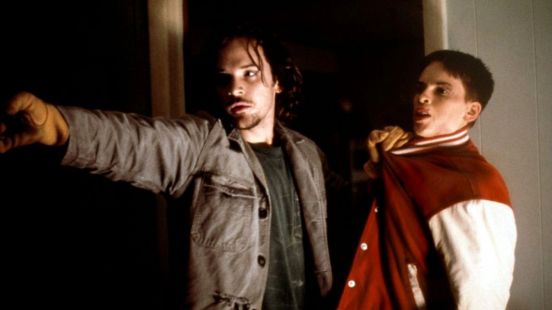
Similarly, in Boys Don’t Cry, John and Tom try to deprive Brandon of his masculinity through both their words and actions. Most of the time Brandon is referred to using he/him pronouns, however, “in the few instances in which “she” is used, those referring to Brandon as a female are typically the men whose manhood has been threatened by his appropriation of masculinity” (Cooper 54). John is possessive of Lana and thus intimidated by Brandon’s relationship with her, therefore he misgenders Brandon to make himself come off as the only “true” man in her life. John and Tom later attempt to assert their masculinity through the use of violence. Both John and Tom believe that by brutally beating and raping Brandon they can strip him of any maleness he possesses. They viciously assault Brandon as they feel it proves that they are more masculine than Brandon could ever attempt to be. However, the assault does not make Brandon any less of a man, but only solidifies the fact that John and Tom are not only cowards with fragile masculinity, but criminals that deserve to rot for their actions.
The two films have vastly different outcomes, with one leaving viewers on a positive, even uplifting note, whereas the other ends in a horrific tragedy that often creates feelings of hopelessness. With this being said, the contrasting conclusions weigh heavily on the fact that there is a class distinction between the two films. In Colette Missy notes his class privilege when he states that were it not for his social status and title he would be forced to deal with harsh backlash. Brandon, however, is residing in small town, “white trash” Nebraska, therefore he gets absolutely no respect and has no hopes of being treated with any kind of dignity.
While one films ends with a horrendous death, and the other displays a rebirth of sorts, both Colette and Boys Don’t Cry illustrate how queer identities have always existed globally. Although, with one film taking place in the 1890s and the other occurring in the 1990s, it is disheartening to see just how little progress has been made over the course of nearly a century. Even though such a substantial amount of time has passed between the movies, it proves just how far we still have to go. Oftentimes it feels as though we have made more progress from the late 1990s up until now, as more terms and resources have been made available. However, with the current state of the nation and a president that is attempting to take away trans rights, it is clear that the minimal progress achieved by the LGBT+ community could start to unravel soon. Therefore, it is pertinent that we do not let queer identities and historical accounts be erased, as stories have the power to change the way we view history, and hopefully they will have an effect on the way we proceed into the future as well.
Works Cited
Boys Don’t Cry. Directed by Kimberly Peirce. Performances by Hilary Swank, Chloë Sevigny, Peter Sarsgaard, Brendan Sexton III, and Alicia Goranson. Fox Searchlight Pictures, 1999.
Colette. Directed by Wash Westmoreland. Performances by Keira Knightley, Dominic West, Eleanor Tomlinson, Denise Glough, and Aiysha Hart. Bleecker Street, 2018.
Cooper, Brenda. “Boys Don’t Cry and Female Masculinity: Reclaiming a Life and Dismantling the Politics of Normative Heterosexuality.” Critical Studies in Media Communication, vol. 19, no. 1, March 2002, 44-63.
Halberstam, Judith. “An Introduction to Female Masculinity.” Female Masculinity, Duke University Press, 1998, 1-43.
Sullivan, Nikki. “Transsexual Empires and Transgender Warriors.” A Critical Introduction to Queer Theory, New York University Press, 2003, 99-118.

 Queer Cinema
Great review! It’s cool that you compared Colette and Boys Don’t Cry. I haven’t seen Boys Don’t Cry yet, but it’s interesting to see how many similarities these two movies have. Talking about queer and trans historical figures reminds me of the trans history wall we made in class. Trans identities aren’t some new trend, they’ve existed pretty much as long as human beings have existed. I also loved your point about Willy wanting Colette to stop seeing Missy because he can’t control their relationship. I’ve heard multiple stories about straight men who start open relationships with their wives or girlfriends, because they want to be with other women, and they get angry when their significant others hook up with other men. These really are timely movies in many ways.
LikeLiked by 1 person
I really enjoyed your comparison the two films. I have not yet seen Boys Don’t Cry, but I am glad to read a lot of your preface to the film. I think there is a lot to be said about trans men and their ability to display healthy masculinity that many cis men lack. From what I understand, the films display very different messages, but I believe they both encompass beauty and pain in queer lives. Thanks for sharing!
LikeLiked by 1 person
You do a great job of comparing these two films, despite how different they are! I have yet to see Boys Don’t cry, but based on what I know, I agree that it delivers a vastly different message about gender nonconformity than Colette does. Both films, however, do indeed remind audiences that there have been gender nonconforming people in the world for centuries, and also reminds us of how beautiful and freeing it can be. And yet still, they both also remind us about how devastating and heartbreaking it can be, too.
LikeLiked by 1 person