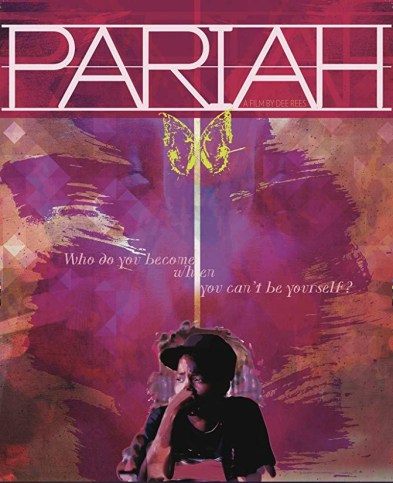
Queer people of color struggle more than any other group when it comes to freely expressing themselves. This is often the case because, in addition to facing racism on a daily basis, these people are forced to deal with prejudice in regards to their gender identity or sexuality. Worse still, they are constantly having to defend themselves because, according to white, conservative society, they are black and LGBT, both of which they label as “deviant.” More often than not, this leads queer P.O.C. to conform or adjust their behavior to fit the requirements outlined for them by their peers. Looking at this concept in terms of mainstream cinema, it is typically not a topic of open discussion. However, the 2011 film, Pariah, seeks to change that, offering an honest depiction of the hardships endured by a young, black lesbian as she learns to embrace her identity.
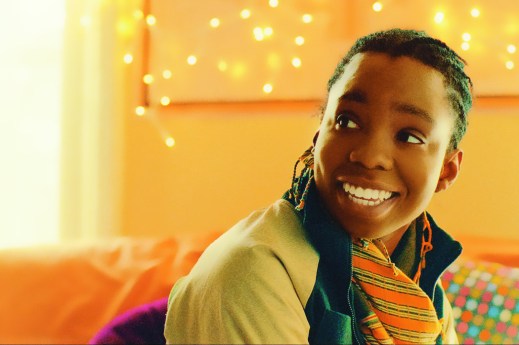
A feature-length expansion of a short film by the same title, Pariah tells the liberation story of Alike (Adepero Oduye). The 17-year-old is a black lesbian that comes from a relatively conservative, middle-class family. Her father, Arthur (Charles Parnell), is a police detective, while her mother, Audrey (Kim Wayans), is quite religious. Audrey thinks that Alike is spending too much time with her best friend Laura (Pernell Walker), who is an out lesbian, and she therefore worries that this is causing Alike to go through a tomboy phase. As a result of this, Audrey makes Alike hang out with Bina (Aasha Davis), a co-worker’s daughter that also attends their church.
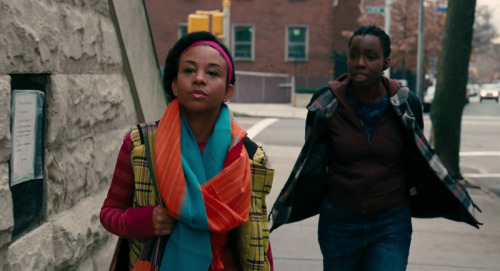
While the girls seem to have nothing in common at first, they ultimately bond over music and writing, and Alike begins to fall for Bina. The two become intimate one night, but the next morning Bina wants nothing to do with Alike relationship-wise, leaving Alike confused, angry, and heartbroken. These mixed emotions and her parents’ turbulent marriage prompt Alike to come out to her parents during a heated argument, which in turn forces her to confront her own sexual identity in the process. While she initially presents a certain gender depending on who she is around, Alike eventually disrupts the notion that a person must be either masculine or feminine, thus resulting in the consolidation of the multiple genders she has been performing.
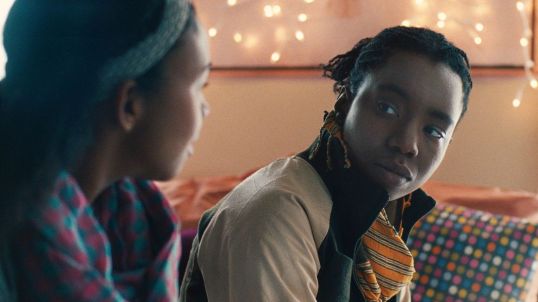
In her gender study focused on black lesbians, Mignon R. Moore outlines three ways in which gender is physically presented–femme, gender-blender, and transgressive. The first category includes traditionally feminine clothing, such as dresses, skirts, low cut tops, etc. Jumping to the third category, transgressive consists of more masculine clothing, that is baggy as opposed to form fitting. While the middle category is related to an androgynous presentation, “[r]ather than a de-emphasis on femininity or masculinity, gender-blenders combine specific aspects of both to create a unique look” (125). Over the course of the film, Alike moves back and forth between these categories until she is finally able to settle into an honest presentation of self.
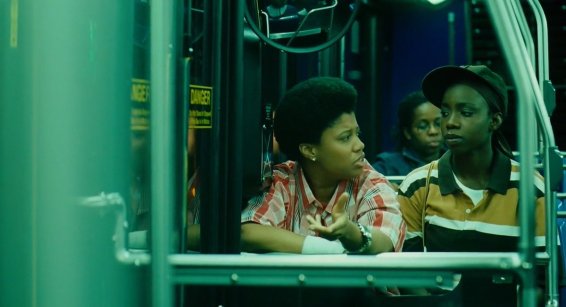
At the beginning of the film, after leaving the club with Laura, Alike changes her outfit on the bus ride home. She swaps out her hat, durag, and baggy shirt for a tighter pink top that reads “Angel” as well as a pair of earrings. This shows how Alike dresses a certain way to please her parents, particularly her mother. Despite not feeling like her true self in the clothes her mother buys for her, Alike ultimately gives into her mother’s wishes when it comes to clothing. This is likely the case because she has witnessed firsthand the resentment and rejection Laura faced with her mother upon coming out. Alike is essentially paralyzed since “those whose opinions matter most, those to whom one feels closest, and those to whom one turns to for support and protection from outsiders” have the potential to become her “harshest critics” (118), therefore she chooses to present herself as femme when she is in her family’s presence.
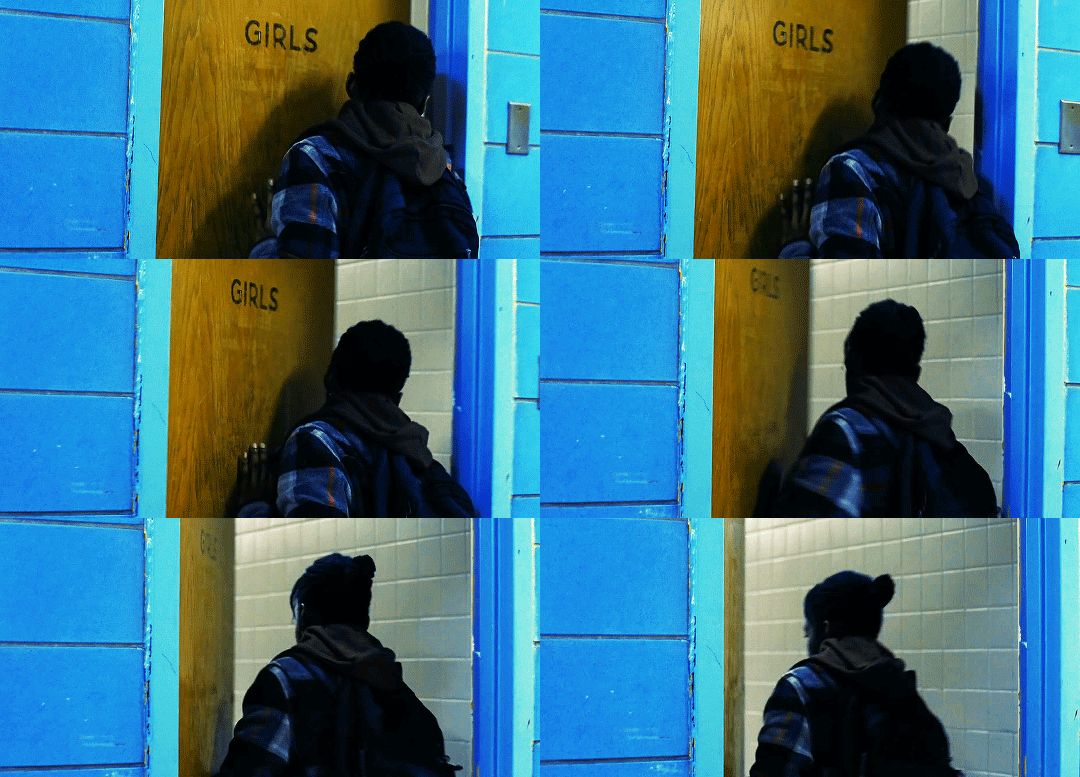
When Alike is at the club with Laura, she presents a much different version of herself. Borrowing some of her best friend’s clothes, Alike dresses in looser, more masculine outfits, often wearing snapbacks to complete her look. This gender presentation also occurs when Alike is at school, going to the bathroom to change the moment she enters the building. Even though she seems to be more content in the transgressive category, Alike still comes off as performative when doing so. Whenever Alike is with Laura at the lesbian bar she appears to be physically uncomfortable. The fact that she is a virgin and has never been in a lesbian relationship likely adds to this awkwardness, however, it is clear that Alike feels that she is unable to be her true self in this space. She sees no room to be who she truly wants to, believing that in the club she must either be feminine and thus oversexualized or totally masculine (complete with a strap on), and she does not feel entirely comfortable with either of those options.
It is not until she begins spending more quality time with Bina that Alike is slowly able to combine the genders she has been presenting. She wears shirts, jackets, and scarves that include a vast spectrum of colors so that her outfits cannot be definitively labelled masculine or feminine. She is able to enter the gender-blender category, presenting a personalized look that unites components of both of her previous roles. Although, while Bina allows Alike to be more vulnerable and thus let her true colors show, she is not the sole reason that Alike is able to be who she really is, as she continues to consolidate these genders even after Bina breaks things off.
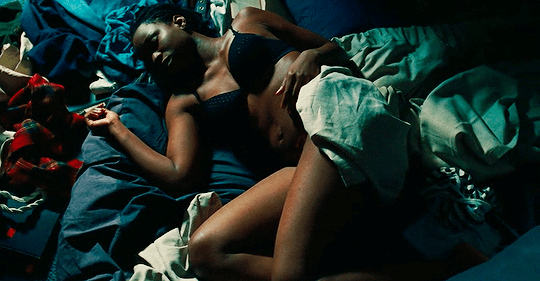
Coming home after Bina tells her to not mention their relationship to anyone, Alike strips off all of her clothes, lying down in just her underwear in the privacy of her room. This shedding of clothes symbolizes how, due to her recent experiences, Alike will no longer be satisfied presenting herself in a particular manner for the sake of those around her. In this instance, Alike is no longer performing, but rather just being–existing as her authentic self.
Awoken by the sound of her parents fighting, Alike goes downstairs and discovers it is her they are discussing. Alike inserts herself into the argument, which ends with her coming out to her parents, screaming at them that she is a lesbian. This scene delves into the fact that this is unfortunately the reality for many queer P.O.C. when they come out. Unlike their privileged, white counterparts, P.O.C. are often forced into coming out as the decision to do so is taken away from them, as is depicted here. Audrey robs Alike of the choice to come out when she begins assaulting her, both verbally and physically. However, rather than giving into the shame and guilt as she did before, Alike instead chooses to fight back. She confidently and wholeheartedly asserts herself, all while dispelling misconceptions before her parents even have the opportunity to address them. She states with conviction that “this is not a phase” and “there’s nothing wrong with me” (Pariah), supplying herself with the reassurance that her parents are too homophobic to provide. The heartbreak caused by Bina in conjunction with the episode involving her parents causes Alike to realize that simply because one or even a handful of people do not accept her does not mean that she should change to fit their requirements.
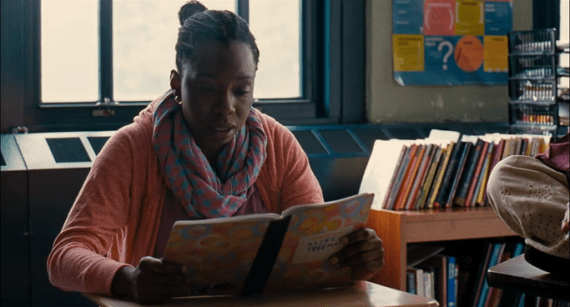
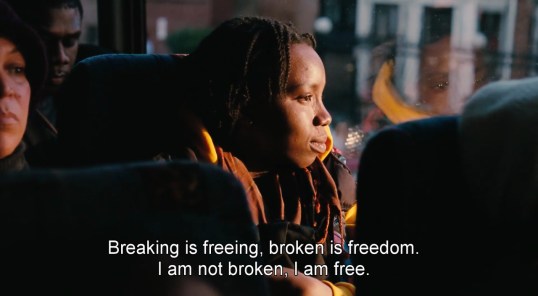
Throughout the film, Alike uses poetry as an outlet to express her true identity, and thus she finds solace in it. Her poems become a vehicle through which she can be her natural self, even when she is performing multiple genders outside of her writing. The poem that she recites at the conclusion of the movie serves as a way to indicate Alike’s liberation from her current situation and the oppression she has faced.
In a last ditch effort to reconcile with her mother before leaving to begin college early, Alike is once more let down as Audrey responds to Alike saying “I love you” by coldly replying “I’ll be praying for you” before exiting the room. However, if the final poem stands as a symbol for Alike’s coming out and breaking free from society’s constraints, then her teacher’s nod of approval at this poem simultaneously grants Alike the acceptance that she desperately wanted, but that her mother refused to give. By telling her father, “I’m not running, I’m choosing,” when he questions her moving to California, Alike proves that she is not doing so out of shame, guilt, or even fear, but that at last she is making a decision for herself and no one else.

It is clear to see why this film resonates with so many viewers, as it provides a more accurate illustration of the emotions and reactions that countless queer P.O.C. have on a daily basis. It then becomes upsetting when it’s noted that “Pariah has made about $750,000″ and that it only “opened at four theaters…[getting] to twenty-four at its peak” (Keeling et al. 434). Even though the feature film was adapted from a short, Pariah is still a relatively small film. The hopes that it would potentially become more mainstream were crushed at the Oscars when it received no nominations, while The Help gained all the praise that year. Pariah’s director, Dee Rees, questioned why there seems to be a finite amount of space for black cinema so much that there is only room for one film to be acknowledged at a time. She stated, “[t]here’s room enough for The Help and Pariah” (436), as both of the stories detailed in each respective film are significant and deserve to be told.
The mainstream film industry has more than enough capacity for and quite frankly needs more films that feature P.O.C., especially queer P.O.C. All too often, people presume that a person is either black or LGBT+, and that they somehow cannot be both. Obviously, this is not the case, and contrary to this belief, race and gender/sexuality are not always separate topics, therefore in many instances they should not be treated as such. Numerous P.O.C. identify as queer and it’s time that more of their stories got told.
Works Cited
Keeling, Kara, et al. “Pariah and Black Independent Cinema Today: A Roundtable Discussion.” GLQ: A Journal of Lesbian and Gay Studies, vol. 1, no. 2-3, June 2015, 423-439.
Moore, Mignon R. “Lipstick of Timberlands?: Meanings of Gender Presentation in Black Lesbian Communities.” Signs: Journal of Women in Culture and Society, vol. 32, no. 1, 2006, 113-139.
Pariah. Directed by Dee Rees. Performances by Adepero Oduye, Kim Wayans, Aasha Davis, Charles Parnell, and Pernell Walker. Focus Features, 2011.

 Queer Cinema
I really enjoyed your discussion of the symbolism of Alike’s clothing. I never thought of the scene after being with Bina as something referring to her as her authentic self, but the imagery makes perfect sense! I think presentation can be exhausting, and it is clear that Alike was tired of feeling so closed in and having to “fake” many aspects of her identity to feel safe.
LikeLiked by 1 person
I love that you were able to fit so many topics in your analysis. There’s this idea that all lesbians must present as either butch or femme, and Alike’s struggle to fit either category rang true to me. It’s sad knowing that Bina helped her express herself more honestly when you know how that relationship turned out. But as you said, that wasn’t the only thing that helped Alike find herself. By the end, her presentation is all her own.
LikeLiked by 1 person
I appreciate that you included her English teacher in your analysis! I didn’t pick up on the fact that she’s finally receiving affirmation from a female figure, something she didn’t get from her mother. It’s especially important since, she’s sharing her innermost thoughts with her teacher, and her teacher is entirely accepting of them, while also providing positive reinforcement and constructive criticism along the way. All Alike wanted was to be herself and be accepted in doing so, and her teacher provided her a space to do that.
LikeLiked by 1 person